Sociotechnical Research

Conducted research with the Sociotechnical Systems and Wellbeing Research Lab, Brown University, under Dr. Diana Freed

Project Focuses

Youth digital safety, older adults, AI research

Role

Research assistant

Timeline

18 months

Institution

Brown University, Data Science Institute

SWRL, Sociotechnical Systems and Wellbeing Research Lab

Youth Digital Safety and Gender-Based Violence

White paper / policy research · 2026

Developed in partnership with the New York State Office for the Prevention of Domestic Violence (OPDV), this report draws on a mixed-methods study involving 76 youth, parents, educators, and law enforcement professionals across New York State. It examines how young people experience and navigate digital safety risks, including AI-related harms, gaming platforms, sextortion, deepfakes, and technology-facilitated gender-based violence. The findings identify opportunities to strengthen policy, privacy, security, education, and technology design.

Read the white paper (PDF)

Citation

Diana Freed, Alyssa Lanter, Maya De Los Santos, Daniel Schiffman, Daniel Sedarous, Alexandra Hogue, Sophia Lloyd George, Jackson Schwartz, Ethan McDowell, Papayaw Afari, Shadrack Annor, Rachel Brooks, Kosta Karathanasopoulos, and Christie Cadet. “Youth Digital Safety and Gender-Based Violence: Exploring a Digital Safety Ecosystem Through Multi-Stakeholder Perspectives.” Office for the Prevention of Domestic Violence, New York State, 2026.
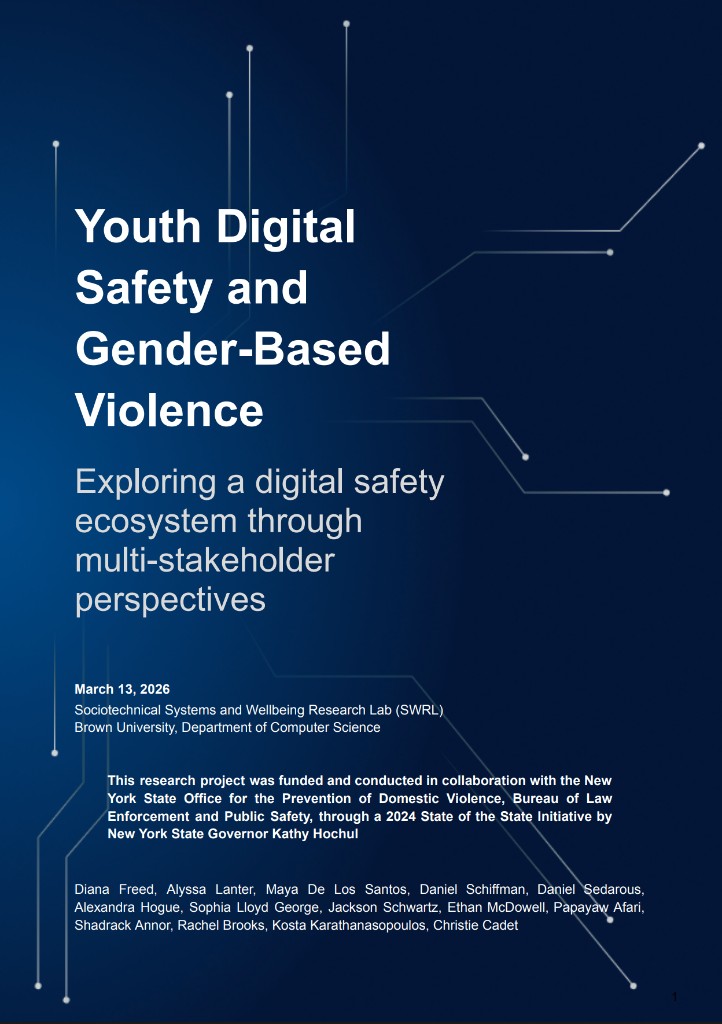
Cover of the white paper Youth Digital Safety and Gender-Based Violence

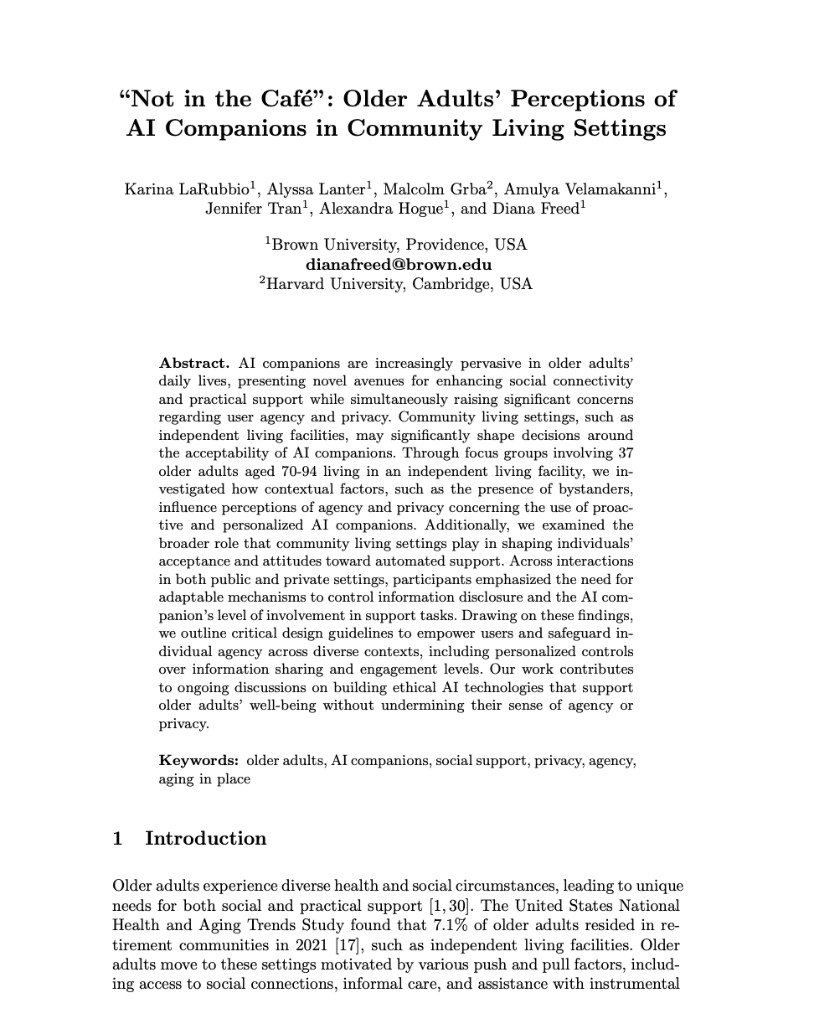
“Not in the Café”: Older Adults’ Perceptions of AI Companions in Community Living Settings

Peer-reviewed research paper · 2025

Through focus groups with 37 older adults aged 70–94 living in an independent living facility, this study examines how community settings and the presence of bystanders shape perceptions of privacy, agency, and acceptance of proactive, personalized AI companions. Findings highlight the importance of giving users control over information sharing and the level of AI involvement in support tasks, informing design guidelines for AI companions that support older adults’ well-being while respecting their autonomy and privacy.

Read the paper

Citation

Karina LaRubbio, Alyssa Lanter, Malcolm Grba, Amulya Velamakanni, Jennifer Tran, Alexandra Hogue, and Diana Freed. “‘Not in the Café’: Older Adults’ Perceptions of AI Companions in Community Living Settings.” Proceedings of the 19th EAI International Conference on Pervasive Computing Technologies for Healthcare, 2025.

First page of the paper Not in the Café: Older Adults’ Perceptions of AI Companions in Community Living Settings

AI & Gender-Based Harms: Implications for Policy and Practice Conference

Conference planning and coordination · 2026

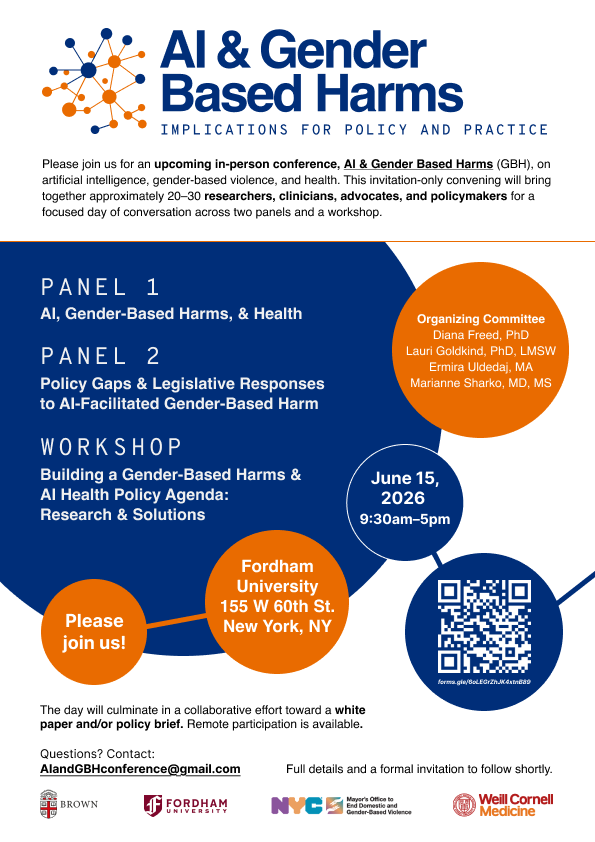
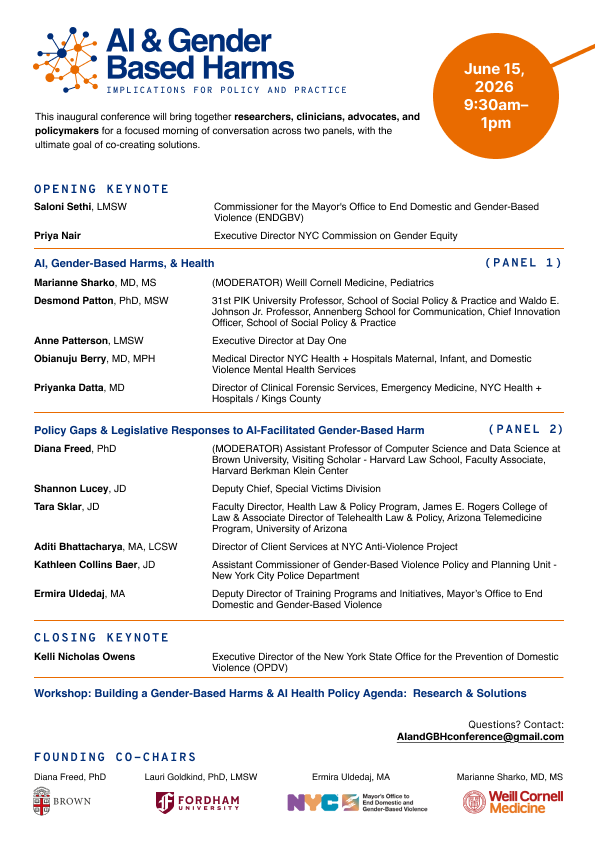
Held on June 15, 2026, this inaugural conference brought together researchers, clinicians, advocates, and policymakers for panels and a workshop on AI and gender-based harms, with the goal of co-creating solutions.

Read more

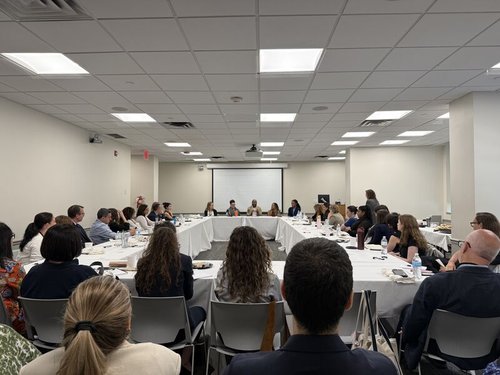
Participants seated around a U-shaped table at the AI and Gender-Based Harms conference
The conference in session

Youth Safety Technograph

Research instrument

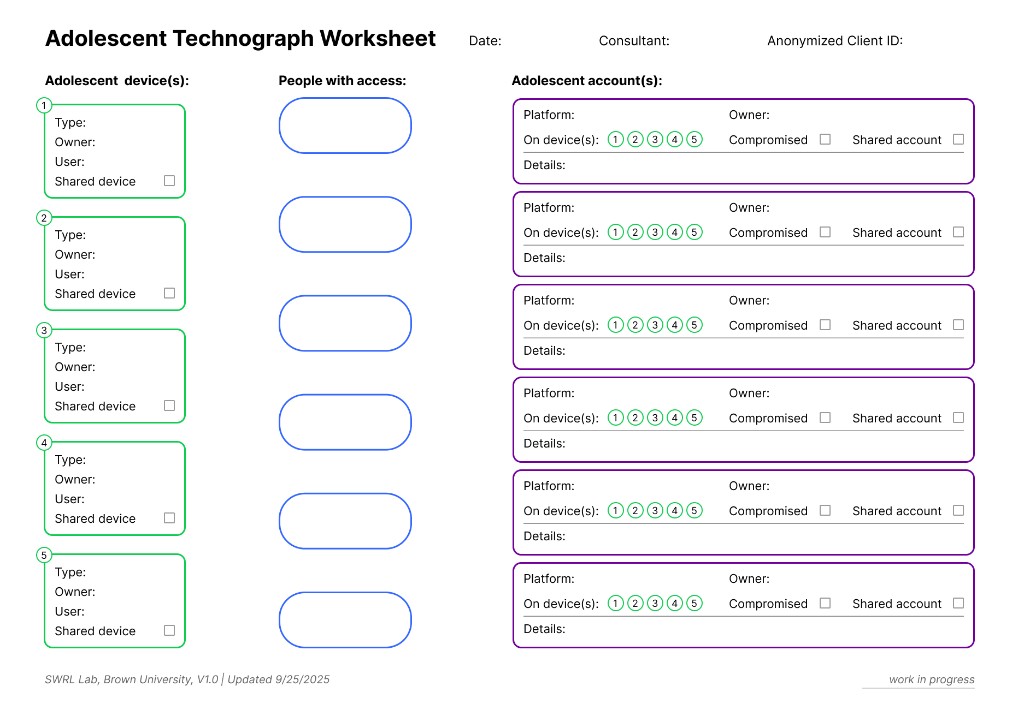
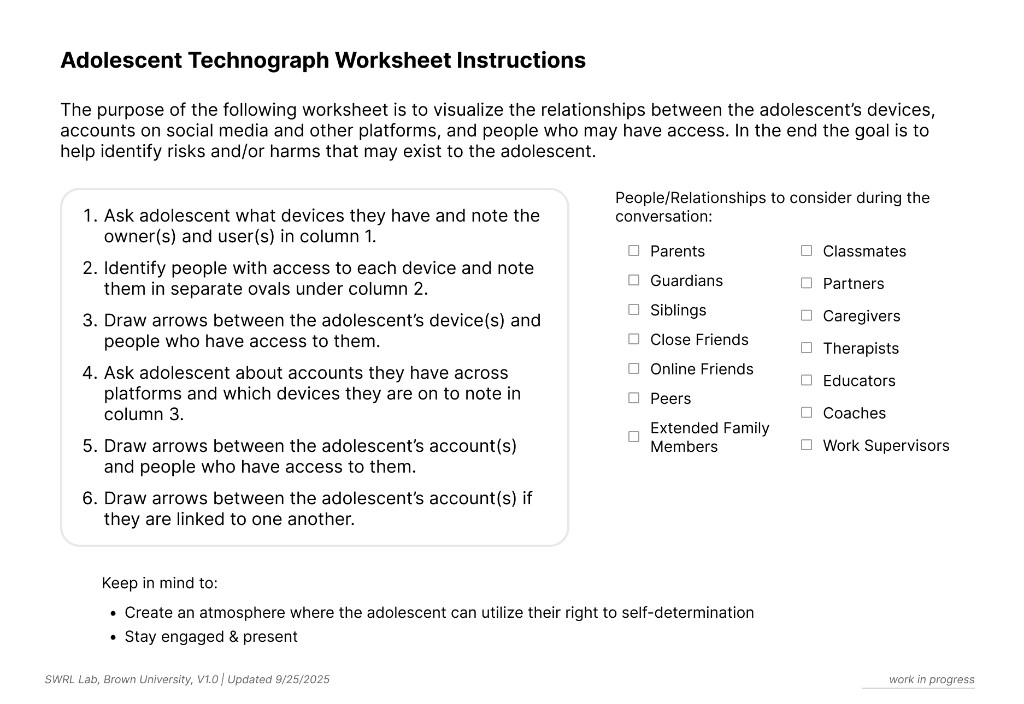
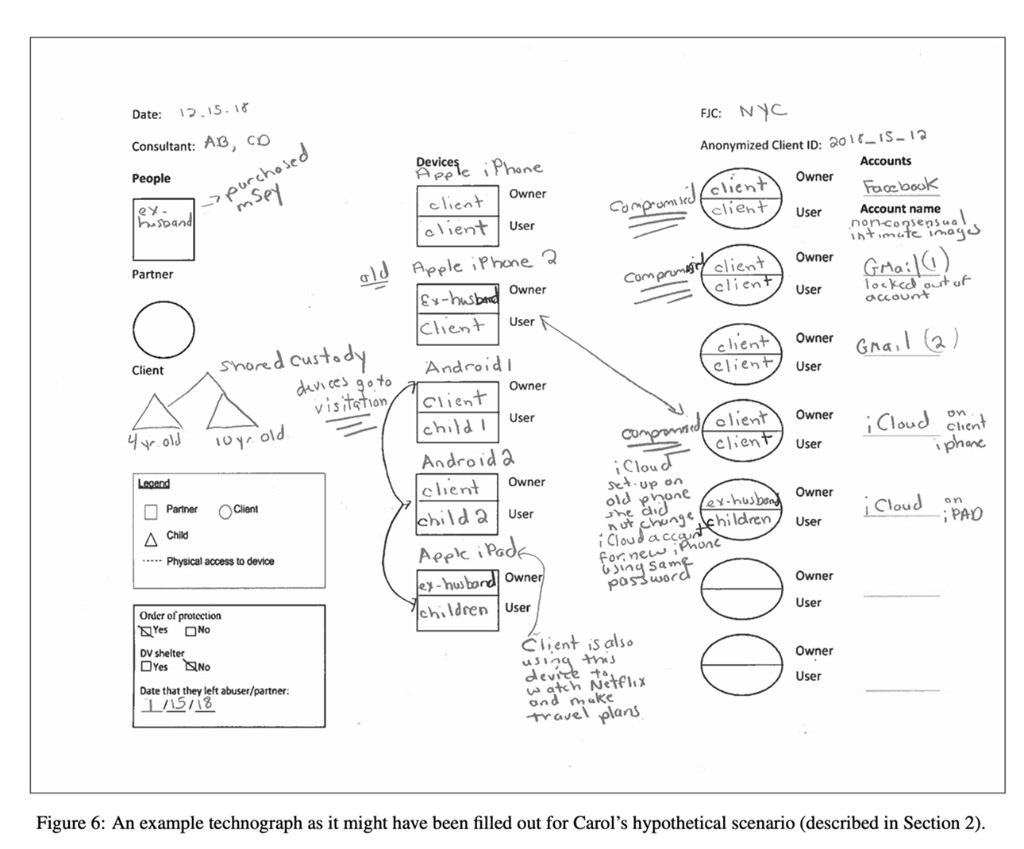
The Adolescent Technograph Worksheet maps the relationships among an adolescent’s devices, accounts on social media and other platforms, and the people who may have access to them. It records device type, owner, and user; people with access; and account details such as platform, owner, which devices an account is on, and whether it is shared or compromised. Those connections are meant to help identify risks and harms in a young person’s digital life.

Technology Assessment for Youth (TAFY)

Research instrument

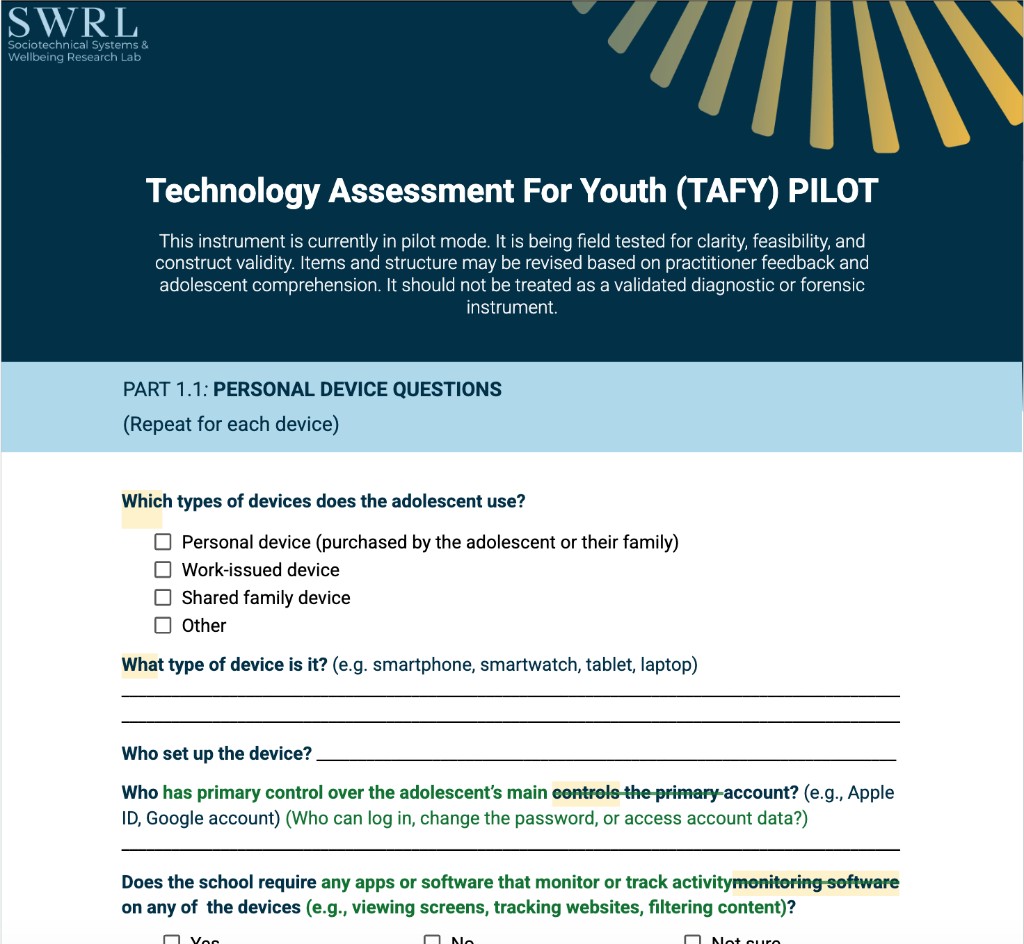
TAFY is a pilot instrument for asking about the devices an adolescent uses and how those devices are set up, controlled, and monitored. It is being field tested for clarity, feasibility, and construct validity, and it is not a validated diagnostic or forensic instrument. The personal-device questions cover device type, who set the device up, who has primary control of the adolescent’s main account, and whether any device uses monitoring or filtering software.

First page of the Technology Assessment for Youth pilot, showing personal device questions